Key takeaways
- There are 5 simple steps to follow if your dog runs away.
- These include not chasing them, contacting their microchip company, starting a physical search, spreading the message, and starting a PetRadar search.
- We also offer our expert insight into why dogs run away so you can prevent this from happening again in the future.
What to do when your dog runs away: 5 simple steps
When a dog runs away, it can be incredibly stressful. Not knowing where to begin or how to act quickly can mean your chances of finding them can dwindle. But don't panic. Instead, follow our 5 simple steps.
1. Don't chase them
We talk a lot about our pet's animal instincts, but what about ours? If we see our beloved furry friend running away, our instinct is to chase them and get them back. Unfortunately, this is not the best course of action.
Chasing your dog can make them fearful and can even kickstart their 'survival mode.' This is when their fight or flight instinct takes over, making the pup focus only on safety, food, and shelter. In this mode, many dogs will try and avoid any contact with people and other animals, even their owners! It can even mean your pup may not recognize you. But don't worry, this is only temporary.
Instead, you need to stay still and gently call their name. Don't use frustrated or angry tones; keep to a few familiar words that dogs respond to in your happy voice to avoid confusing them.
2. Contact the microchip company
It may seem like contacting your microchip company shouldn't be a priority. However, it's one of the first steps you should take.
By making sure your contact details are up to date, and the microchip company knows your dog is missing, you'll avoid some nasty scenarios. For example, if your lost dog is found and handed in to a shelter, but they are unable to contact you, they may euthanize them.
Similarly, if your dog has been stolen, having your details connected to your furry friend will make it a lot more difficult to sell them.
By making sure your contact details are up to date, and the microchip company knows your dog is missing, you'll avoid some nasty scenarios.
3. Start a physical search
The most effective way to find a missing dog is through a thorough physical search. If your dog has just run away, then you're in a good position to have a high chance of finding them yourself.
If they ran away while you were out walking, use the following checklist:
- Stay on the trail: Stay on the walk that they ran away on, but start retracing your steps back to the car. Your dog will be able to follow your trail using their sense of smell.
- Nearby fields and farms: If your pup gets lost away from home, they may be frightened and disoriented. This means they'll be attracted to quiet places away from people, like fields and farms.
- Local parks: Parks and places densely populated near the trail will attract a sociable pup.
- Wooded areas: A scared dog may choose to stay in the wooded area of a trail because it offers lots of hiding places and a sense of security.
If they ran away from home, use the following checklist:
- Outbuildings: Check sheds, garages, and bin stores around your and your neighbors's houses.
- Gardens: If your dog wants an adventure, they'll likely try to find friends in your neighbors' backyards.
- Under cars: Your dog may be frightened if they are lost and choose to hide from people and other animals under cars.
- Local parks: Our furry friends have most likely memorized the route to their favorite places, and this will probably include the local park.
- Town centers: A sociable dog will be attracted to the sounds and smells of people and shops, so be sure to check town centers.

4. Report them missing and spread the message
The more people who know about your lost dog, the better. And this includes more official organizations as well as your neighbors.
Report your dog missing to:
- Local animal shelters
- Local veterinary practices
- Local dog warden
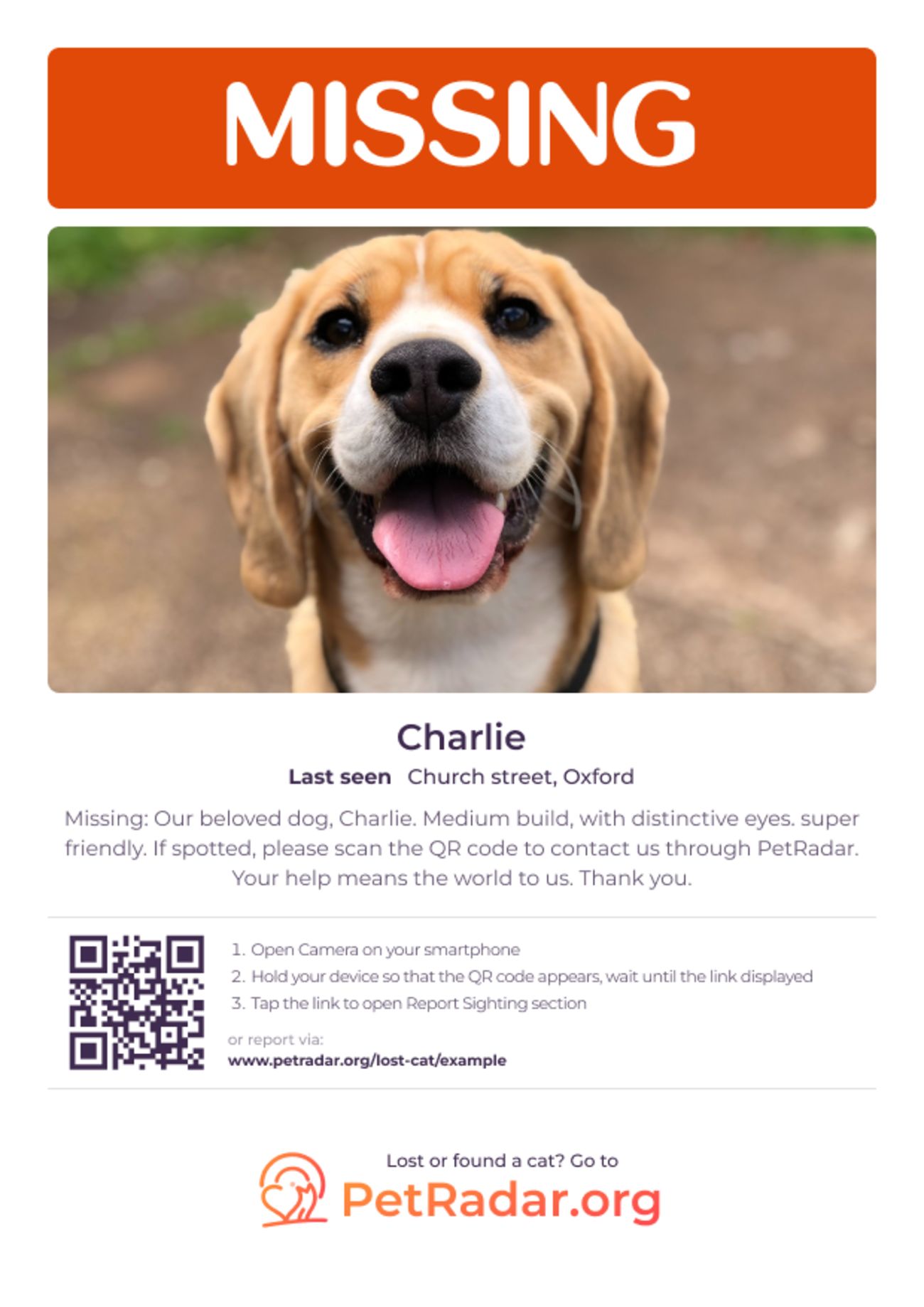
You should also create some missing dog posters to distribute around your neighborhood. You can receive a free printable and personalized poster designed by experts from PetRadar once you report your pup missing to us. Once you have printed this, try pinning it up in the following places:
- Public notice boards
- Local shops (with permission)
- Lamposts
- Town halls
- Posting through neighbors' letterboxes
- Communal areas of apartment buildings
If you want to make your own poster, stick to these rules:
- Use an easy to read font
- Use a simple color palette
- Use big, bold fonts
- Include multiple images of your pup
- Include a detailed description of your dog's physical traits
- Include a detailed description of your dog's personality
5. Start a PetRadar search
If your efforts haven't been successful yet, starting a PetRadar search can increase your chances of being reunited with your furry friend.
We use social media advertisements to notify over 4,000 people in your area. All you have to do is select the radius of your search area, and we'll create sponsored posts of your lost dog that will pop up on your neighbors' Facebook and Instagram feeds.
When they see this digital missing dog poster, they can save it for later, send it to a friend, or report a sighting directly from the post. We'll notify you of any activity like this instantly. You can also manage the search and keep on top of all sightings in your personal dashboard.
We've already reunited {{petsFoundBack}} lost pets with their owners, so you're in good hands! We'll also:
- Send you a free printable missing dog poster to distribute around your neighborhood
- List your pet on our website
- Offer constant guidance and support
We've already reunited {{petsFoundBack}} lost pets with their owners, so you're in good hands!
Why do dogs run away?
It can be easy to blame ourselves. Whether you're a dog mom or dad, it can feel like you've failed if your pup has chosen to run away. However, the majority of the time, it's not related to the pet owners.
Instincts
Even the most well-trained dogs can't ignore their instincts. The most likely to cause your dog to run away are:
- Mating instinct: If your male dog picks up on the scent of a female dog in heat, they will run for miles to try and find them. This is almost unavoidable. However, if your dog is neutered, their urges will be less and easier to ignore.
- Hunting instinct: We've seen how quickly our dogs move when a squirrel crosses their path. This is their hunting instinct in action. So, if they spot something in the distance or a small animal starts to run away from them, they'll feel the need to chase it.
Most of the time, your dog will return to you once they've lost interest or lost the scent. However, if these instincts have taken them far away, they may become disoriented and lost. This is when they can switch into 'survival mode' and choose to hide.
Curiosity
Our dogs are neophillic. (source) This means they are attracted to new smells. This desire to follow and learn more about new smells often drives our dogs' curiosity.
Usually, our pups will follow a smell and return to us once they've found out what it is. If they are on a familiar trail, they'll be able to find their way around. However, to avoid them becoming lost when following a scent, you should keep them on a leash if you're exploring a new place.
Fear and anxiety
Dogs can be sensitive creatures. They thrive on a stable routine, comforting behavior, and regular food. If this changes, they can experience intense fear and anxiety. Some things that can induce anxiety in dogs include:
- Lack of exercise
- Lack of stimulation
- Lack of attention
- Too little food
- Lots of visitors in their territory
- Loud noises
- Sickness
If they don't feel safe or comfortable in their environment, they will often run away and hide. To prevent this, respect your dog's home and ensure you put your furry friend's wellbeing first.
Dogs can be sensitive creatures. They thrive on a stable routine, comforting behavior, and regular food.

FAQs
Final thoughts
It's important to stay positive and remind yourself that your dog is not lost forever. Over 90% of lost dogs are found safely.
We've already reunited {{petsFoundBack}} with their owners, so starting a PetRadar search will mean you're in good hands!
We know just how distressing and heartbreaking it can be when one of the family goes missing, so we'll support you through the whole process and offer personal guidance for finding your pup.